|
Esnoga Bet Emunah 12210 Luckey Summit San Antonio, TX 78252 United States of America © 2025 E-Mail: gkilli@aol.com |
|
Esnoga Bet El 102 Broken Arrow Dr. Paris TN 38242 United States of America © 2025 E-Mail: waltoakley@charter.net |
Triennial Cycle (Triennial Torah Cycle) / Septennial Cycle (Septennial Torah Cycle)
|
Three and 1/2 year Lectionary Readings |
Third Year of the Triennial Reading Cycle |
|
Iyar 12, 5785 - May 9/10, 2025 |
Third Year of the Shmita Cycle |
Candle Lighting and Habdalah Times: https://www.chabad.org/calendar/candlelighting.htm
Roll of Honor:
This Commentary comes out weekly and on the festivals thanks to the great generosity of:
His Eminence Rabbi Dr. Hillel ben David and beloved wife HH Giberet Batsheva bat Sarah
His Eminence Rabbi Dr. Eliyahu ben Abraham and beloved wife HH Giberet Dr. Elisheba bat Sarah
His Honor Paqid Adon David ben Abraham
His Honor Paqid Adon Ezra ben Abraham and beloved wife HH Giberet Karmela bat Sarah,
His Honor Paqid Adon Tzuriel ben Abraham and beloved wife HH Giberet Gibora bat Sarah
Her Excellency Giberet Sarai bat Sarah & beloved family
His Excellency Adon Barth Lindemann & beloved family
His Excellency Adon John Batchelor & beloved wife
His Excellency Adon Yehoshua ben Abraham and beloved wife HE Giberet Rut bat Sarah
His Excellency Adon Michael ben Yosef and beloved wife HE Giberet Sheba bat Sarah
Her Excellency Giberet Prof. Dr. Emunah bat Sarah & beloved family
His Excellency Adon Robert Dick & beloved wife HE Giberet Cobena Dick
His Excellency Adon Ovadya ben Abraham and beloved wife HE Giberet Mirit bat Sarah
His Excellency Adon Shlomoh ben Abraham
His Excellency Adon Yaaqov ben David
His Excellency Adon Bill Haynes and beloved wife HE Giberet Diane Haynes
Her Excellency Giberet Krysta Wallrauch & beloved family
For their regular and sacrificial giving, providing the best oil for the lamps, we pray that GOD’s richest blessings be upon their lives and those of their loved ones, together with all Yisrael and her Torah Scholars, amen ve amen!
Also, a great thank you and great blessings be upon all who send comments to the list about the contents and commentary of the weekly Torah Seder and allied topics.
If you want to subscribe to our list and ensure that you never lose any of our commentaries, or would like your friends also to receive this commentary, please do send me an E-Mail to gkilli@aol.com with your E-Mail or the E-Mail addresses of your friends. Toda Rabba!
Blessings Before Torah Study
Blessed are You, Ha-Shem our GOD, King of the universe, Who has sanctified us through Your commandments, and commanded us to actively study Torah. Amen!
Please Ha-Shem, our GOD, sweeten the words of Your Torah in our mouths and in the mouths of all Your people Israel. May we and our offspring, and our offspring's offspring, and all the offspring of Your people, the House of Israel, may we all, together, know Your Name and study Your Torah for the sake of fulfilling Your delight. Blessed are You, Ha-Shem, Who teaches Torah to His people Israel. Amen!
Blessed are You, Ha-Shem our GOD, King of the universe, Who chose us from all the nations, and gave us the Torah. Blessed are You, Ha-Shem, Giver of the Torah. Amen!
Ha-Shem spoke to Moses, explaining a Commandment. "Speak to Aaron and his sons, and teach them the following Commandment: This is how you should bless the Children of Israel. Say to the Children of Israel:
May Ha-Shem bless you and keep watch over you; - Amen!
May Ha-Shem make His Presence enlighten you, and may He be kind to you; - Amen!
May Ha-Shem bestow favor on you and grant you peace. – Amen!
This way, the priests will link My Name with the Israelites, and I will bless them."
These are the Laws for which the Torah did not mandate specific amounts: How much growing produce must be left in the corner of the field for the poor; how much of the first fruits must be offered at the Holy Temple; how much one must bring as an offering when one visits the Holy Temple three times a year; how much one must do when performing acts of kindness; and there is no maximum amount of Torah that a person must study.
These are the Laws whose benefits a person can often enjoy even in this world, even though the primary reward is in the Next World: They are: Honoring one's father and mother; doing acts of kindness; early attendance at the place of Torah study -- morning and night; showing hospitality to guests; visiting the sick; providing for the financial needs of a bride; escorting the dead; being very engrossed in prayer; bringing peace between two people, and between husband and wife; but the study of Torah is as great as all of them together. Amen!
A Prayer for Israel
Our Father in Heaven, Rock, and Redeemer of Israel, bless the State of Israel, the first manifestation of the approach of our redemption. Shield it with Your lovingkindness, envelop it in Your peace, and bestow Your light and truth upon its leaders, ministers, and advisors, and grace them with Your good counsel. Strengthen the hands of those who defend our holy land, grant them deliverance, and adorn them in a mantle of victory. Ordain peace in the land and grant its inhabitants eternal happiness.
Lead them, swiftly and upright, to Your city Zion and to Jerusalem, the abode of Your Name, as is written in the Torah of Your servant Moses: “Even if your outcasts are at the ends of the world, from there the Lord your God will gather you, from there He will fetch you. And the Lord your God will bring you to the land that your fathers possessed, and you shall possess it, and He will make you more prosperous and more numerous than your fathers.” Draw our hearts together to revere and venerate Your name and to observe all the precepts of Your Torah, and send us quickly the Messiah son of David, agent of Your vindication, to redeem those who await Your deliverance.
We pray for his Honor Adon Tzuriel ben Avraham. Mi Sheberach…He who blessed our forefathers Abraham, Isaac and Jacob, Moses and Aaron, David and Solomon, may He bless and heal His Honor Paqid Tzuriel ben Avraham, May the Holy One, Blessed is He, be filled with compassion for him to restore his health, to heal him, to strengthen him, and to revivify him. And may He send him speedily a complete recovery from heaven, among the other sick people of Yisrael, a recovery of the body and a recovery of the spirit, swiftly and soon, and we will say amen ve amen!
Friday Evening May 9, 2025
Evening: Counting of the Omer Day 27
Today is twenty-seven days, which is three weeks and six days of the Omer.
Yesod ShebeNetzach
Then read the following:
|
Day of the Omer |
|
Ministry |
Date |
Ephesians |
Attributes |
|
27 |
|
Parnas 1/Parnas 3 |
Iyar 12 |
4:28 |
Confidence united with Bonding |
Let him who stole[1] steal no more, but rather let him labor,[2] doing honest (beneficial) work with his own
hands so that he may have something to share [3] with anyone who is in need.[4]
Shabbat: “Esfah-Li” – “Gather unto Me”
|
Shabbat |
Torah Reading: |
Weekday Torah Reading: |
|
אֶסְפָה-לִּי |
|
Saturday Afternoon |
|
“Esfah-Li” |
Reader 1 – Bamidbar 11:16-18 |
Reader 1 – Bamidbar 11:23-25 |
|
Reader 2 – Bamidbar 11:18-20 |
Reader 2 – Bamidbar 11:26-28 |
|
|
“Júntame” |
Reader 3 – Bamidbar 11:20-22 |
Reader 3 – Bamidbar 11:29-31 |
|
Bamidbar (Numbers) 11:16-22 |
Reader 4 – Bamidbar 11:16-18 |
|
|
Ashlamatah: Yoel (Joel) 2:16-24, 27 |
Reader 5 – Bamidbar 11:18-20 |
Monday & Thursday Mornings |
|
|
Reader 6 – Bamidbar 11:20-22 |
Reader 1 – Bamidbar 11:23-25 |
|
Tehillim (Psalms) 99:1-9 |
Reader 7 – Bamidbar 11:18-20 |
Reader 2 – Bamidbar 11:26-28 |
|
N.C.: Mk 9:41-48; Lk 17:1-3 |
Maftir – Bamidbar 11:20-22 |
Reader 3 – Bamidbar 11:29-31 |
Contents of the Torah Seder
· The Seventy Elders (The Sanhedrin) – Numbers 11:16-22
· G-d responds to the people – Numbers 11:18-20
· Mosheh asks How shall I give them meat? – Numbers 11:21-22
Reading Assignment:
|
The Torah Anthology: Yalkut Me’Am Lo’Ez By: Rabbi Yaakov Culi, Translated by Aryeh Kaplan Published by: Moznaim Publishing Corp. (New York, 1990) Vol.13 – “Numbers I- First Journeys” pp. 295-300 |
Ramban: Numbers Commentary on the Torah Translated and Annotated by Rabbi Dr. Charles Chavel Published by Shilo Publishing House, Inc. (New York, 1975) pp. 101 - 110 |
Welcome to the World of P’shat Exegesis
In order to understand the finished work of the P’shat mode of interpretation of the Torah, one needs to take into account that the P’shat is intended to produce a catechetical output, whereby a question/s is/are raised and an answer/a is/are given using the seven Hermeneutic Laws of R. Hillel and as well as the laws of Hebrew Grammar and Hebrew expression.
The Seven Hermeneutic Laws of R. Hillel are as follows:
[cf. http://www.jewishencyclopedia.com/view.jsp?artid=472&letter=R]:
1. Ḳal va-ḥomer: "Argumentum a minori ad majus" or "a majori ad minus"; corresponding to the scholastic proof a fortiori.
2. Gezerah shavah: Argument from analogy. Biblical passages containing synonyms or homonyms are subject, however much they differ in other respects, to identical definitions and applications.
3. Binyan ab mi-katub eḥad: Application of a provision found in one passage only to passages which are related to the first in content but do not contain the provision in question.
4. Binyan ab mi-shene ketubim: The same as the preceding, except that the provision is generalized from two Biblical passages.
5. Kelal u-Peraṭ and Peraṭ u-kelal: Definition of the general by the particular, and of the particular by the general.
6. Ka-yoẓe bo mi-maḳom aḥer: Similarity in content to another Scriptural passage.
7. Dabar ha-lamed me-'inyano: Interpretation deduced from the context.
Welcome to the World of Remes Exegesis
Thirteen rules compiled by Rabbi Ishmael b. Elisha for the elucidation of the Torah and for making halakic deductions from it. They are, strictly speaking, mere amplifications of the seven Rules of Hillel, and are collected in the Baraita of R. Ishmael, forming the introduction to the Sifra and reading as follows:
- Ḳal wa-ḥomer: Identical with the first rule of Hillel.
- Gezerah shawah: Identical with the second rule of Hillel.
- Binyan ab: Rules deduced from a single passage of Scripture and rules deduced from two passages. This rule is a combination of the third and fourth rules of Hillel.
- Kelal u-Peraṭ: The general and the particular.
- u-Peraṭ u-kelal: The particular and the general.
- Kelal u-Peraṭ u-kelal: The general, the particular, and the general.
- The general which requires elucidation by the particular, and the particular which requires elucidation by the general.
- The particular implied in the general and excepted from it for pedagogic purposes elucidates the general as well as the particular.
- The particular implied in the general and excepted from it on account of the special regulation which corresponds in concept to the general, is thus isolated to decrease rather than to increase the rigidity of its application.
- The particular implied in the general and excepted from it on account of some other special regulation which does not correspond in concept to the general, is thus isolated either to decrease or to increase the rigidity of its application.
- The particular implied in the general and excepted from it on account of a new and reversed decision can be referred to the general only in case the passage under consideration makes an explicit reference to it.
- Deduction from the context.
- When two Biblical passages contradict each other the contradiction in question must be solved by reference to a third passage.
Rules seven to eleven are formed by a subdivision of the fifth rule of Hillel; rule twelve corresponds to the seventh rule of Hillel, but is amplified in certain particulars; rule thirteen does not occur in Hillel, while, on the other hand, the sixth rule of Hillel is omitted by Ishmael. With regard to the rules and their application in general. These rules are found also on the morning prayers of any Jewish Orthodox Siddur.
Rashi & Targum Pseudo Jonathan for: Bamidbar (Numbers) 11:16–22
|
JPS (Rashi) |
Targum |
|
16. Then the Lord said to Moses, "Assemble for Me seventy men of the elders of Israel, whom you know to be the people's elders and officers, and you shall take them to the Tent of Meeting, and they shall stand there with You. |
16. Then spoke the LORD unto Mosheh, Gather together in My name seventy righteous/generous men of the elders of Israel, whom you know to be elders of the people, and who were set over them in Mizraim, and bring them to the tabernacle to stand there with you. |
|
17. I will come down and speak with you there, and I will increase the spirit that is upon you and bestow it upon them. Then they will bear the burden of the people with you so that you need not bear it alone. |
17. And I will be revealed in the glory of My Shekinah, and will speak with you there, and will amplify the spirit of prophecy that is upon you and bestow it upon them; and they will sustain with you the burden of the people, that you may not bear it alone. |
|
18. And to the people, you shall say, 'Prepare yourselves for tomorrow and you shall eat meat, because you have cried in the ears of the Lord saying, "Who will feed us meat, for we had it better in Egypt." [Therefore,] the Lord will give you meat, and you shall eat. |
18. And say you to the people, make ready against the morrow that you may eat flesh; because you have lamented before the LORD, saying, who will give us flesh to eat? For it was better with us in Mizraim. The LORD therefore will give you flesh that you may eat. |
|
19. You shall eat it not one day, not two days, not five days, not ten days, and not twenty days. |
19. You will not eat it one day, nor two days, nor five, nor ten, nor twenty days; |
|
20. But even for a full month until it comes out your nose and nauseates you. Because you have despised the Lord Who is among you, and you cried before Him, saying, "Why did we ever leave Egypt?"'" |
20. for a month of days, until the smell of it comes forth from your nostrils, and it becomes a loathing to you; because you have been contemptuous against the Word of the LORD, whose glorious Shekinah dwells among you, and because you have wept before Him, saying, Why should we have come out from Mizraim? |
|
21. Moses said, "Six hundred thousand people on foot are the people in whose midst I am, and You say, 'I will give them meat, and they will eat it for a full month'? |
21. But Mosheh said, six hundred thousand footmen are the people among whom I dwell, and You have said, I will give them flesh to eat for a month of days! |
|
22. If sheep and cattle were slaughtered for them, would it suffice for them? If all the fish of the sea were gathered for them, would it suffice for them?" |
22. Will the flocks of Araby or the cattle of Nabatea be killed for them to satisfy them, or all the fishes of the Great Sea be collected, that they may have enough? |
Rashi Commentary for: Bamidbar (Numbers.) 11:16–22
16 Assemble for Me This is a response to your complaint, that you said, “Alone I cannot....” Where were the first group of elders? Had they not sat with them [with Moses and Aaron] even in Egypt, as it says, “Go and gather the elders of Israel” (Exod. 3:16)? But they died in the fire at Tab’erah (verses 1-3). They deserved this already at Sinai, as it is written, “They perceived God” (Exod. 24:11), behaving irrevently, like someone munching his bread while speaking to the king, and this is the meaning of “they ate and drank” (ibid.). However, God did not want to give cause for mourning at the giving of the Torah, so he punished them here. -[Midrash Tanchuma Beha’alothecha 16]
whom you know to be... Those whom you know, that they were appointed as officers over them in Egypt [to oversee] the rigorous labor, and they had mercy on them, and were beaten on their account, as it says, “the officers of the children of Israel were beaten” (Exod. 5:14). Now they shall be chosen in their greatness, just as they had suffered in their [Israel’s] distress. - [Sifrei Beha’alothecha 1:42:16]
and you shall take them Take them with words: “How fortunate you are that you have been appointed leaders over the children of the Omnipresent!”- [Sifrei Beha’alothecha 1:42:16]
and they shall stand there with you so that the Israelites should see and treat them with esteem and honor, saying, "How beloved are these who have entered with Moses to hear the speech from the mouth of the Holy One, blessed is He. - [Sifrei Beha’alothecha 1:42:16]
17 I will come down This is one of the ten descents [of the Shechinah] recorded in the Torah. - [Sifrei Beha’alothecha 1:42:17]
and speak with you But not with them. - [Sifrei Beha’alothecha 1:42:17]
and I will increase Heb. וְאָצַלְתִּי, as the Targum renders it: וַאֲרַבֵּי, and I will increase, as in “But against the nobles of (אֲצִילֵי) the children of Israel” (Exod. 24:11).
and bestow it upon them What did Moses resemble at that time? A candle placed upon a candelabrum; everyone lights from it, yet its brightness is not diminished. - [Sifrei Beha’alothecha 1:42:17, Midrash Tanchuma Beha’alothecha 12]
Then they will bear... with you Stipulate with them that they take upon themselves the burden of My children, who are troublesome and recalcitrant. - [Sifrei Beha’alothecha 1:42: 16]
so that you need not bear it alone This is an answer to what you said, “Alone I cannot carry...” (verse 14). -[See Sifrei Beha’alothecha 1:42: 17]
18 Prepare yourselves Heb. הִתְקַדְּשׁוּ, prepare yourselves for punishment. Similarly, it says, “and prepare them for the day of slaughter” (Jer. 12:3). - [Sifrei Beha’alothecha 1:42:18]
20 But even for a full month This [concerned] the [comparatively] virtuous ones, who languish on their beds and later their soul departs. But concerning the wicked ones it says, “the meat was still between their teeth [... when the anger of the Lord flared...]” (verse 33). This is how it is taught in the Sifrei (Beha’alothecha 1:42:20), but in the Mechilta (Beshallach, Vayassa 3:13) the opposite is taught: the wicked ate and suffered [as a result] for thirty days, whereas [concerning] the virtuous—"the meat was still between their teeth" [thus, they did not suffer prolonged agony].
until it comes out of your nose As Targum renders: “You will be sickened by it”; it will seem to you as if you gorged on it until it is discharged by way of the nose.
and nauseates you Heb. וְהָיָה לָכֶם לְזָרָא You will cast it away from you more readily than you welcomed it [Sifrei Beha’alothecha 1:42:20]. In the words of R. Moshe Hadarshan (the preacher) I noted that there is a language in which a sword is called זָרָא , [meaning that this meat will be the cause of their death].
the Lord Who is among you Had I not established My Presence among you, you would not have had the arrogance to engage in all these matters. - [Sifrei Beha’alothecha 1:42:20]
21 Six hundred thousand people on foot He was not concerned with mentioning the additional three thousand (above 1:46). R. Moshe Hadarshan, however, explains that only those [six hundred thousand] who left Egypt wept.
22 If sheep and cattle were slaughtered This is one of the four cases in which R. Akiva expounded, and R. Simeon expounded differently. R. Akiva says, “Six hundred thousand people on foot, and You have said that I will give them meat, and they will eat it for a full month?” The entire verse is expounded literally. The clause, וּמָצָא לָהֶם means, “Would it suffice for them?” This is similar to [the clause,] “and he has sufficient means (וּמָצָא) for redeeming it” (Lev. 25:26). Which [case] is worse? This one, or [when Moses said] “Listen now, you rebels” (20:10)? [Obviously, this one.] However, since [in this case] he [Moses] did not say it in public, Scripture spares him, and refrains from punishing him. But that of Meribah was in public, so Scripture does not spare him. R. Simeon says, God forbid! This never entered the mind of that righteous man. Would the one about whom it says, “he is trusted throughout My house” (12:7) suggest that the Omnipresent cannot provide for us sufficiently? Rather, this is what he meant: "Six hundred thousand... on foot... and You say, 'I will give them meat for a full month’? Then You will kill such a great nation? Will sheep and cattle be slaughtered for them so that they should then be killed, and this meal will satisfy for them forever [i.e., it will be their last]? Is this a credit for you? Do we tell a donkey, 'Eat this measure of barley, and then we will cut off your head’?" God answered him, "If I do not give them, they will say that My power is limited. Would the fact that God’s power appears limited to them please you? Let them and a hundred like them perish, as long as My power is not limited before them for even one moment!"- [Tosefta Sotah 6:4]
Ketubim: Tehillim (Psalms) 99:1-9
|
Rashi |
Targum |
|
1. The Lord has reigned, nations will quake; [before] Him Who dwells between the cherubim, the earth will falter. |
1. The LORD reigns, the peoples will tremble; He whose presence abides among the cherubim will shake the earth. |
|
2. The Lord is great in Zion, and He is high over all the peoples. |
2. The LORD is great in Zion; and He is high over all the Gentiles. |
|
3. They will acknowledge Your great and awesome name, [that] it is holy, |
3. They will confess His name, great and fearful; He is holy. |
|
4. And the might of the King who loves judgment; You founded equity; judgment and righteousness You made in Jacob. |
4. And You love the strength of the king of justice; You have established integrity; You have made justice and righteousness/generosity in Jacob. |
|
5. Exalt the Lord our God and prostrate yourselves to His footstool, it is holy. |
5. Sing praise in the presence of the LORD our God and bow down towards His sanctuary; he is holy. |
|
6. Moses and Aaron among His priests, and Samuel among those who call in His name, would call out to the Lord, and He would answer them. |
6. Moses and Aaron are among His priests who gave their life for the people of the LORD, and Samuel prayed for them before the LORD, like the fathers of old, who prayed in His name; they would pray in His presence, and He would answer them. |
|
7. In a pillar of cloud He would speak to them; they kept His testimonies and the statue He gave them. |
7. In the pillar of glorious clouds He would speak with them; they kept the commandments of] his testimony, and the covenant that He gave to them. |
|
8. O Lord, Our God, You answered them; You were a forgiving God for them but vengeful for their misdeeds. |
8. O LORD our God, you answered them; you were a forgiving God for Your people for their sake and take vengeance for their deeds. |
|
9. Exalt the Lord our God and prostrate yourselves to the mount of His sanctuary, for the Lord our God is holy. |
9. Sing praise in the presence of the LORD our God, and bow down towards the mount of His sanctuary, for the LORD our God is holy. |
Rashi’s Commentary to Tehillim (Psalms) 99:1-9
1 nations will quake [This] deals with the war of Gog and Magog. Then the nations will quake, as the matter that is said (Zech. 14:12): “And this shall be the plague, etc.”
will falter Heb. תנוט, an expression of (73:2): “my feet faltered (נטוי).”
3 They will acknowledge Your name They will acknowledge the might of the King Who loves judgment.
4 and the might of the King Who loves judgment This refers back to the preceding verse.
You founded equity You founded compromise and peacemaking between persons, by Your statement (Exod. 23:5): “Should you see your enemy’s donkey lying etc.”; (ibid. verse 4), “Should you come upon Your enemy’s ox, etc.” Now who is it who sees his enemy being kind to him, whose heart will not be inspired to embrace him and kiss him? (Tanchuma).
7 In a pillar of cloud He would speak to them Even with Samuel. This is what is stated (I Sam. 9:11f.): “and they said to them, Is the seer here? and they answered them and said, He is (יֵש).” You will see a cloud attached to his doorway, as Scripture says (Num. 9:20): “And sometimes the cloud would be...”
they kept His testimonies and the statute He gave them The statute that He gave them.
8 a forgiving God [Forgiving] the iniquity of Israel.
for them Heb. להם , for their sake.
but vengeful You were vengeful for their misdeeds: Moses and Aaron for “Hear now, you rebels!” As for Samuel, because he did not direct his sons in the good way, he died young.
9 for the Lord our God is holy because He is strict with the righteous/generous, He is sanctified in the world, and so He says (Exod. 29: 43): “and it will be sanctified with My glory,” meaning “with those glorified by Me.”
Meditation from the Psalms
Tehillim (Psalms) 99:1-9
By: Hakham Dr. Hillel ben David
Psalms chapter 99 speaks of the future Day of Judgment, when G-d will call all of the depraved nations to task.0F0F[5] The cataclysmic war of Gog and Magog will take place during this period of judgment and retribution.1F1F[6] At that time, HaShem will establish His universal reign, unchallenged by any nation on earth.
Ibn Yachya explains that Moses dedicated this psalm to the tribe of Dan. Moses2F2F[7] blessed Dan, saying: Dan is a young [and powerful] lion, who leaps up from Bashan,3F3F[8] for when HaShem will reign, nations will tremble, and Dan will have the opportunity to conquer them in G-d's Name. The Targum explains this blessing for us:
Targum Pseudo Jonathan Devarim (Deuteronomy) 33:22 And Moshe the prophet of HaShem blessed the tribe of Dan, and said: The tribe of Dan is like a lion's whelp, his land is watered by the streams that flow from Mathnan, and his border comes unto Batania.
JERUSALEM: And Moshe the prophet of HaShem blessed the tribe of Dan, and said: The tribe of Dan is like a lion's whelp, and his land is watered from Batanea.
Let’s spend a bit of time exploring Dan and his tribe.
In Hebrew the name Dan is derived from the root din meaning judgment. This will provide some valuable clues to understanding this tribe. Yaakov’s blessing, in Bereshit, as explained by the Targum, tells us flat out that a man from the tribe of Dan is to judge the tribes of Israel:
Targum Pseudo Jonathan for: Bereshit (Genesis) 49:16-18 16. From the house of Dan there is to arise a man who will judge his people with the judgment of truth. All the tribes of Israel will hearken to him together. JERUSALEM: DAN, He will be the deliverer who is to arise, strong will he be and elevated above all kingdoms.9F9F[9] 17. A chosen man will arise from the house of Dan, like the basilisk which lies at the dividing of the way, and the serpent's head which lurks by the way, that bites the horse in his heel, and the master from his terror is thrown backward. Even thus will Shimshon bar Manovach slay all the heroes of Philistia, the horsemen and the foot; he will hamstring their horses and hurl their riders backwards.
JERUSALEM: And he will be like the serpent that lies in the way, and the basilisk which lurks at the dividing of the road, which strikes the horse in his heel, and thinks by the terror of him to throw his rider backward.
18. When Yaaqob saw Gideon bar Joash and Shimshon bar Manovach, who were established to be deliverers, he said, I expect not the salvation of Gideon, nor look I for the salvation of Shimshon; for their salvation will be the salvation of an hour; but for Your salvation have I waited, and will look for, O LORD; for Your salvation is the salvation of eternity.
JERUSALEM: He is Shimshon bar Manovach (Sampson), who will be a terror upon his adversaries, and a fear upon them that hate him, and who will slay kings with princes. Our father Yaaqob said, My soul has not waited for the redemption of Gideon bar Joash which is for an hour, nor for the redemption of Shimshon which is a creature redemption, but for the Redemption which You have said in Your Word will come for Your people the sons of Israel, for this Your Redemption my soul has waited.
Dan heads up three tribes just as Yehuda, Reuben, and Ephraim when they camped in the wilderness. Dan, Asher, and Naphtali were in the north[10] under Dan's banner.
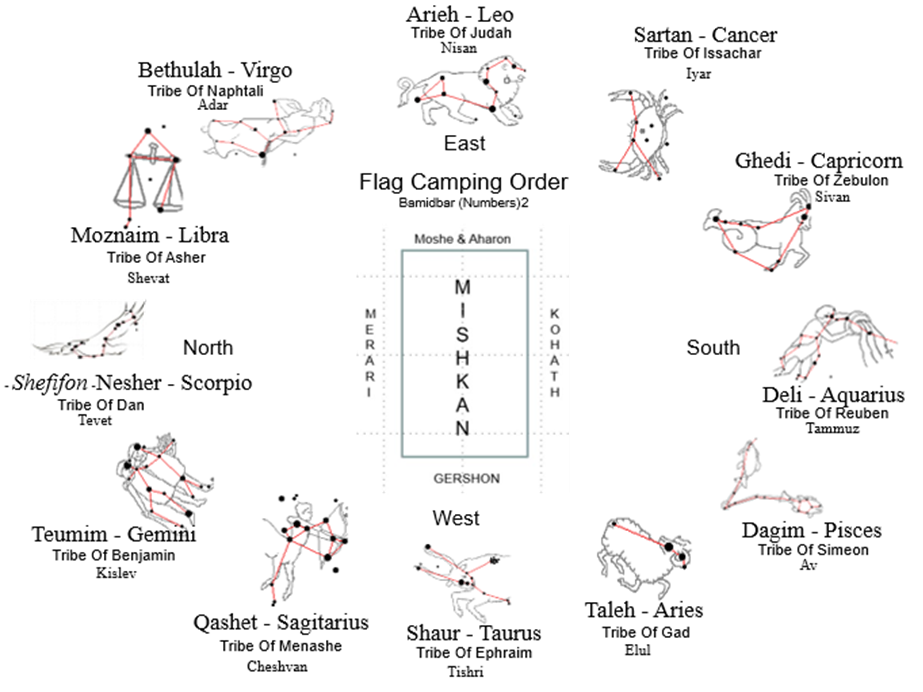
|
Camping Order |
Marching Order |
|
|
|
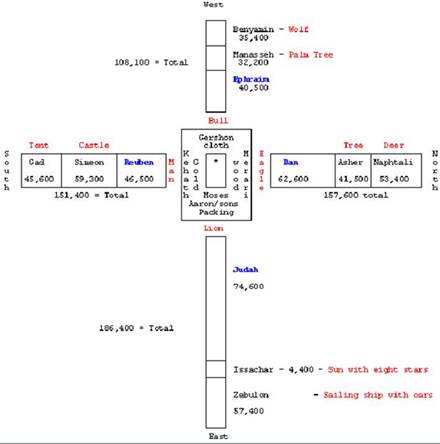
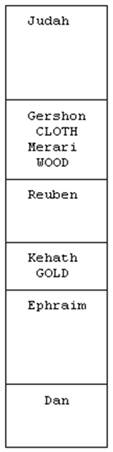
This suggests that Dan has a leadership position. In the marching order Dan brings up the rear. He guards the rear of the Bne Israel from attacks. Marching last and camping in the north11F11F[11] are the forces of Dan. Just as the north12F12F[12] would later bring evil to Israel,1,[13] so too Dan's portion (in the northern part of Israel) would be a center for idolatry.F[14] Dan marched last because he had the power to retrieve those who had fallen outside the cloud.
Given that Dan is associated with justice, please remember that the primary job of a Jewish king is to provide justice! As the chief judge, a Jewish king is able to apply the death penalty without a Sanhedrin.15F15F[15] He is able to pardon any crime. So, it appears that Dan, as a judge applying justice – as his name implies, is in the same boat as the tribe of Yehuda. Samson, as a judge in Israel, is the classic example of the tribe of Dan providing justice for the Bne Israel. This emphasis on justice is prominent in our psalm:
Tehillim (Psalms) 99:4 The strength also of the king who loveth justice-- Thou hast established equity, Thou hast executed justice and righteousness in Jacob.
This focus on justice was also what inspired our psalmist when he reviewed our Torah portion. The selecting of the seventy elders was only for working with Moshe to provide justice for the people. In that future day of judgement, we will all be able to stand up to HaShem’s justice thanks to the tribes of Yehuda and Dan.
Many synagogues have two lions embroidered on the curtains of their ark, and these same two lions can also be found on the covers of many Torah scrolls. Why?
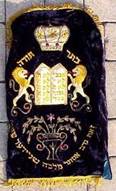
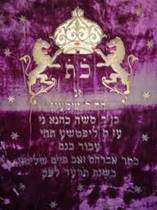 The two artisans who oversaw the
construction of the MishkanF[16] are from Yehuda
and Dan.F[17] They are:
"Betzalel son of Uri son of Chur, of the tribe of Yehuda"[18] and " Ahaliab,
son of Achisamach, of the tribe of Dan".F[19]
Why did these two specific tribes, Yehuda and Dan, merit to construct
the Mishkan?
The two artisans who oversaw the
construction of the MishkanF[16] are from Yehuda
and Dan.F[17] They are:
"Betzalel son of Uri son of Chur, of the tribe of Yehuda"[18] and " Ahaliab,
son of Achisamach, of the tribe of Dan".F[19]
Why did these two specific tribes, Yehuda and Dan, merit to construct
the Mishkan?
Rashi addresses the question as well:
And Ahaliab – he was of the tribe of Dan, of one of the lowest of the tribes, of the sons of the handmaids, and the Omnipresent placed him with regard to the work of the Mishkan on a level with Betzalel even though he was a member of one of the noble tribes in order to confirm what Scripture says: "He regards not the rich more than the poor”.F[20]
According to this understanding, Betzalel and Ahaliab were chosen as representatives of the entire people of Israel. This understanding emphasizes the attribution of the building of the Mishkan to all of Israel, expressing the fact that the Mishkan belongs to all of Israel.
This combination of Yehuda and Dan is also found in the construction of the Temple built by King Solomon, which is mentioned both in Kings and in Chronicles. Solomon is the son of David, from the tribe of Yehuda, and with him is the architect Chiram. While in Kings it says, "He was the son of a widowed woman from the tribe of Naphtali[21] in Chronicles it says:
Divrei HaYamim bet (II Chronicles) 2:13 The son of a woman of the daughters of Dan, and his father was a man of Tzor, skillful to work in gold, and in silver, in brass, in iron, in stone, and in timber, in purple, in blue, and in fine linen, and in crimson; also to engrave any manner of engraving, and to work all kinds of artistic work; to do whatever shall be put to him, with your skillful men, and with the skillful men of my lord David your father.
We find a parallel note in Melachim:
Melachim alef (I Kings) 7:13-14 And King Shlomo sent and fetched Chiram from Tzor. He was a widow's son of the tribe of Naphtali, and his father was a man of Tzor, a worker in brass, and he was filled with wisdom, and understanding, and knowledge to work all works in brass. And he came to King Shlomo, and wrought all his work.
According to these two sources, the artist Chiram belonged to either the tribe of Dan or that of Naphtali, both the sons of Bilhah, of the inferior tribes, similar to what we saw in the case of the Mishkan.[22]
R. Kasher brings a midrash from Bereshit Rabbati in his Torah Shelemah:
Nor regards the rich more than the poor, for they are all the works of His hands.23F23F[23] This teaches that the great and the small are equal before him. And with respect to the Temple,24F24F[24] King Solomon was from Yehuda and Chiram was from Dan. And similarly, regarding the Messiah: his father is from Yehuda and his mother is from Dan. Therefore, Yehuda and Dan are called lion cubs, for the Messiah will issue from the two of them.25F25F[25]
According to this, there is another reason for the pairing of Yehuda and Dan; the Messiah will issue from these two tribes, and they therefore build the Mishkan, which will enable the perfection of the world.
In a manuscript of one of the Rishonim on the Torah, we read: And we know that for the building of the Mishkan two people were chosen, two tribes of Israel, from Yehuda and from Dan, the one likened to a lion cub, and the other to a serpent and a lion, teaching you how much the building of the Mishkan is likened to them. And also, to allude to the attribute of mercy that is hinted at in the name Yehuda, and to the attribute of justice that is hinted at in the name of Dan.
We see that in the construction of both the Mishkan and the Temple the artisans were from the tribes of Yehuda and Dan. What is the significance of this?
Rashi in Divrei HaYamim26F26F[26] writes:
What need is there to provide lineage from which tribe his father and mother were? This is what it says: "Danani Elohim - G-d has judged me"27F27F[27] and also: "Naftulei Elohim niftalti - Rachel said, “Sacred schemes have I maneuvered”28F28F[28] to equal my sister, and I have also prevailed!’ And she called his name, ‘Naphtali’ (my scheme).”
If Leah shall boast of Betzalel her descendant who will make the Mishkan, one of the descendants of Dan will have to participate in his work, as it says: " Ahaliab, son of Achisamach, of the tribe of Dan". If Shlomo, the descendant of my sister, will build the Temple, the descendants of Dan and Naphtali will have to participate with him.
Here we uncover the reason why Ahaliab, from the tribe of Dan, joined Betzalel, from the tribe of Yehuda. It is because Rachel demanded it. She saw through prophecy that Leah's descendant would construct the Mishkan and demanded that also one of her (servant's) descendants be among the artisans the Mishkan. However, it is still difficult, why was it so important for Rachel that one of her descendants should be among the artisans of the Mishkan?
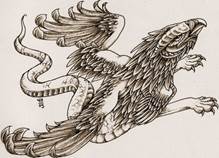 In Bereshit (Genesis) 49:17, when Yaaqov Avinu blesses his
sons, he calls Yehuda: "A lion cub is Yehuda",29F29F[29]
whereas Dan he compares to: "A serpent[30]
(שְׁפִיפֹן Shefifon[31])
on the highway".30F30F[32] However, in
Moshe's blessing to the tribes at the end of Devarim, Moshe compares Dan
to a lion: "Dan is a lion cub".31F31F[33]
How did Dan transform from a serpent into a lion, in Moshe's blessing?
In Bereshit (Genesis) 49:17, when Yaaqov Avinu blesses his
sons, he calls Yehuda: "A lion cub is Yehuda",29F29F[29]
whereas Dan he compares to: "A serpent[30]
(שְׁפִיפֹן Shefifon[31])
on the highway".30F30F[32] However, in
Moshe's blessing to the tribes at the end of Devarim, Moshe compares Dan
to a lion: "Dan is a lion cub".31F31F[33]
How did Dan transform from a serpent into a lion, in Moshe's blessing?
Perhaps we can explain that after the Mishkan was constructed, in which Dan participated along with Yehuda, he was transformed from a snake into a lion. This teaches us that whoever is involved with the construction of the Mishkan is rewarded by becoming a lion. This is also the reason why, in addition to the tribe of Yehuda, the tribe of Dan is also awarded to lead a banner in the travels in Sefer Bamidbar. After it participated in the construction of the Mishkan, it received the same power as the tribe of Yehuda and was allowed to head a banner.32F32F[34] (Recall that we taught many weeks ago that when the urge to worship false gods was excised from the world, that which came out of the Kodesh HaKaddishim was a fiery lion. Thus, we understand that the Beit HaMikdash is associated with a lion.)
Perhaps this is the meaning behind the lions that appear on the Aron Kodesh in synagogues. "A lion cub is Yehuda" and "Dan is a lion cub". This comes to teach that whoever is attached to holiness, and whoever builds the place of holiness, receives the power of the lion. The two lions that are on the curtain are the two powers of courage. The spiritual power of Yehuda and the physical power of Dan are what constructed the Mishkan and the Temple, and in the future, they will bring Mashiach ben David. May he arrive swiftly in our time, Amen v’Amen!
The tribe of Dan has an important part in the battle with Esav. The twelve months correspond to the twelve tribes and Tevet is the month associated with Dan. Based on the Zohar, the month of Tevet is the harshest of the three months associated with Esav. Therefore, it is fitting that power of Kedusha of the month is Dan to overcome Esav, when his son, Chushim, kills Esav.33F33F[35] In addition Esav is considered as coming from the north, and that is where Dan’s encampment was in the desert.34F34F[36] In addition, when Amalek first attacks the Jewish people after leaving Egypt, the Pasuk says that they attacked those who were outside the clouds.35F35F[37] These people are from Dan. This might be seen as a revenge for the killing of their ancestor.
Dan had a sapphire-colored flag, with a picture of a serpent, alluding to how a descendant of Dan, Shimshon behaved in vengeance against the Pelishtim as related in the book of Shoftim.36F36F[38]
Midrash Rabbah - Bamidbar (Numbers) II:7 Dan’s was jacinth, and the color of his flag was similar to sapphire,37F[39] and embroidered on it was a serpent, in allusion to the text, Dan shall be a serpent in the way.38F38F[40]
Dan was the firstborn of his mother Bilhah, Leah’s maidservant, and of Rachel.39F39F[41] The Midrash tells us that for the sake of Dan, Yosef and Benyamin were born.
Midrash Rabbah - Bereshit (Genesis) LXXIII:4 What did He remember in her favor? Her silence on her sister's behalf. When Leah was being given to him, she knew it, yet was silent. AND GOD REMEMBERED RACHEL: and this was but just, because she had brought her rival into her home.40F40F[42] R. Huna and R. Aha in R. Simon's name quoted: Dan, Yoseph, and Benyamin (I Chron. II, 2). For the sake of Dan, Rachel was remembered, for the sake of Dan, Yoseph and Benyamin were born.41F41F[43]
Esav was the grandfather of Amalek, the epitome of evil. When Amalek is removed from the world, then all wickedness will also be removed. That is why we are commanded to remember and not forget.42F42F[44]
The tribe of Dan killed Esav.43F43F[45] How did this happen? We turn to the well-known account of Yaaqov’s burial recorded for us in the Gemara,44F44F[46] and find that it was none other than Chushim ben Dan who brought about Esau’s demise. The sons of Yaakov arrived at Machpelah with Yaakov’s body in hand, only to find Esav blocking the entrance and seeking proof of ownership. Known especially for his lightness of foot,45F45F[47] the swift Naphtali was immediately dispatched to procure the deed proving Yaakov’s ownership of the final burial plot, from Egypt.
The deaf Chushim, however, was unaware of the discussion’s content. Parenthetically, perhaps we might suggest an interesting Remez highlighting how the deafness of Chushim, the lone deaf individual in all of Tanach, is alluded to as part and parcel of his very name. In the Torah, the name Chushim is written without a “vav”: chet shin yud mem -חשים. Spelled backwards, the name consists of the two words, “Me - מי” and “sach -שח”. In Hebrew, “Me sach?” asks the question, “Who is speaking?” A question that a deaf person, in particular, is often compelled to wonder... Furthermore, the name Chushim is also the Hebrew word referring to the senses. Though there are five senses, Chushim ben Dan was missing one of them, the sense of sound. Any coincidence, therefore, that one of the five letters comprising his name would be noticeably absent, as the letter “vav” is dropped and Chushim’s name is spelled with only four letters, he did, after all, only possess four chushim (senses)…
Terribly perturbed by the disgrace to his grandfather’s body by having to wait out an unnecessary delay, Chushim thereupon grabs a staff and swings at Esau’s head, killing Esau instantly47F47F[48] as his two eyes pop out48F48F[49] and land on Yaakov’s knees. It was thus Chushim who killed Esav as Yaakov’s body was finally laid to rest alongside his righteous ancestors.49F49F[50]
How fascinating indeed. Esav meets his downfall through the hands of Chushim, the sole child of Rachel’s son, Dan, the first one born to her through her maidservant, Bilhah.50F50F[51] Chazal inform us repeatedly51F51F[52] that Esav will fall via the hands of Rachel’s descendants.52F52F[53] The power of Esav in the world can only be destroyed by Yosef HaTsadiq and his scions; at times, even through the medium of the tribe of Benyamin, Rachel’s other natural son.53F53F[54] It is Yehoshua from the tribe of Ephraim who will first wage war and emerge victorious against Amalek,[55] and Mordechai55F55F[56] and Esther from Binyamin56F56F[57] who will later vanquish the nefarious Haman. But Yosef vs. Esav is not merely a physical battle, but a spiritual one as well, a ferocious attack on the depravity and inherent evil that Esav personified. Yehoshua, Mordechai, and Esther were all pivotal catalysts in helping rid the world of the malodorous remnants of Amalek’s wickedness.
Who, though, would actually kill the ancestor of this wickedness? None other than Chushim, the lone son of Rachel’s very first son, Dan.
Thus, we see that justice comes to the world through the tribes of Yehuda and Dan. This is the justice spoken of in our chapter of psalms.
Ashlamatah: Yoel (Joel) 2:16-24, 27
|
Rashi |
Targum |
|
15. Sound a shophar in Zion; proclaim a fast, call an assembly. |
15. Blow the trumpet in Zion, decree a fast, proclaim an assembly. |
|
16. Gather the people, prepare the congregation, assemble the elders, gather the infants and the sucklings; let a bridegroom come out of his chamber and a bride from her canopy. |
16. Gather the people together, prepare the congregation, gather the elders together. Bring together the children and those who suck the breast; let the bridegroom go forth from his bedroom and the spouse from the bridal chamber. |
|
17. Between the porch and the altar let the priests, the ministers of the Lord, weep, and let them say, "O Lord, have pity on Your people, and do not make Your heritage a derision, for nations to make them an example. Why should they say among the peoples, 'Where is their God?' " |
17. Between the porch and the altar, let the priests who serve before the LORD weep, and say: “Spare Your people, O LORD and do not make Your inheritance a reproach to be ruled over by the Gentiles! Why should they say among the Gentiles: ‘Where are those who were redeemed by the Memra of their God?’” |
|
18. And the Lord was zealous for His land, and He pitied His people. |
18. Then the LORD spared His land and had compassion on His people. |
|
19. And the Lord replied and said to His people: Behold I send you the corn, the must, and the oil, and you shall be sated by it, and I will no longer make you a derision among the nations. |
19. And the LORD answered and said to His people: Behold I will bless for you grain, wine and oil, and you will be satisfied by them. Nevermore will I put on you the shame of hunger among the Gentiles. |
|
20. And the northerner I will distance from you, and I will drive him to a land barren and desolate; its face to the eastern sea and its end to the western sea, and its stench shall ascend, and its ill savor shall ascend, for it did great things. |
20. I will remove the people who come from the north far from you, and I will drive them into a desolate and ruined land, their front to the eastern sea and their rear to the western sea; and the stench of them will go up and the foul smell of them will rise up. For they have done much evil. |
|
21. Have no fear, O land; rejoice and jubilate, for the Lord has performed great things. |
21. Do not be afraid, O land of Israel! Be glad and rejoice, for the LORD has multiplied blessings among you, His people. |
|
22. Fear not, O beasts of the field, for the dwelling places of the wilderness have become covered with grass, for the trees have borne their fruit, the fig tree and the vine have given forth their strength. |
22. Do not be afraid O beasts of the field, for the habitations of the wilderness are wreathed with flowers, for the tree has produced its fruit, and the fig trees and vines have borne their fruit. |
|
23. And the children of Zion, rejoice and jubilate with the Lord your God, for He gave you the teacher for justification, and He brought down for you rain, the early rain and the late rain in the first month. |
23. O children of Zion be glad and rejoice in the Memra of the LORD your God! For He has given you back your teacher in righteousness/generosity, and he sends rain down for you, the early rain in its time and the late rain in the month of Nisan. |
|
24. And the granaries shall be filled with grain, and the vats shall roar with must and oil. |
24. The threshing floors will be full of grain, and vats will overflow with wine and presses with oil. |
|
25. And I will repay you for the years that the increasing locust, the nibbling locust, the finishing locust, and the shearing locust have devoured-My great army, which I have sent against you. |
25. And I will repay good years in place of the years in which you were pillaged by peoples, tongues, governments, and kingdoms, the great retribution of My army, which I sent against you. |
|
26. And you shall eat, eating and being sated, and you shall praise the Name of the Lord your God, Who has performed wonders with you, and My people shall never be ashamed. |
26. You will eat food and be satisfied and will praise the name of the LORD your God, Who performed wonderful deeds with you; My people, the house of Israel, will be ashamed no more. |
|
27. And you shall know that I am in the midst of Israel, and I am the Lord your God, there is no other; and My people shall never be ashamed. |
27. And you will know that I have caused My Shekinah to dwell in the midst of the house of Israel. And I am the LORD your God, and there is no other; and My people, the house of Israel, will be ashamed no more. |
Rashi’s Commentary on Yoel (Joel) 2:16-24, 27
16. assemble the elders Heb. קִבְצוּ. This is of the form of (I Kings 18:19) “Send and gather (קְבֹץ) for me,” an expression
17 a derision Heb. לְחֶרְפָּה for nations to make them an example Heb. לְמְשָׁל, an expression of, (Deut. 28:37) “for an example (מָשָל) and for a conversation piece.”
18 And the Lord was zealous for His land Heb. וַיְקַנֵּא, an expression similar to (Num. 11: 29) “Are you zealous (הַמְקַנֵּא) for me?” Their distress entered His heart, and He fought their battle and engaged in their necessities. Our Sages explain it as an expression of warning. He warned the locusts concerning His land. [from Sotah 3a]
19 derision Heb. חֶרְפָּה, a derision, that they will call you ill-provided.
20 And the northerner Heb. הַצְּפוֹנִי. This can be interpreted as referring to the host of locusts, upon which the expression, “and I will drive him to a land barren and desolate,” fits aptly. Another explanation: The people that come from the north, viz., the kings of Assyria. And our Sages (Sukkah 52a) state: This is the temptation, which is hidden (צָפוּן) in a person’s heart.
the western sea the eastern sea. And our Sages, who interpreted it [i.e., הַצְּפוֹנִי] as a reference to temptation, interpreted these two seas as the First Temple and the Second Temple. I.e., they explain הַקַּדְמוֹנִי as first and הָאַחֲרוֹן as last. And so, they explained it: Because he directed his face toward the First Temple and the Second Temple and destroyed them. [God says: I will drive him out to a land barren and desolate, where he will find no one to incite. That will be because he set his sights for the First Temple and for the Second Temple and, because he incited the people to sin, they were destroyed. The two Temples, where everyone would gather during the three Pilgrimage Festivals, are symbolized by the sea, where water of the streams gather.] And, according to the Targum, who explains it as a reference to the king of Assyria, we must explain “his face to the eastern sea, and his end to the western sea” to mean that part of his army I will send to the east and part of it to the west.
its ill savor Heb. צַחֲנָתוֹ. The word בָאְשוֹ, its stench, indicates concerning that it is an expression of filth.
for it did great things -I.e., it did a great evil, for it stretched forth its hands upon the great.
21 Have no fear, O land -I.e., the land of Israel, when you repent.
23 the teacher for justification Heb. מוֹרֶה. Your prophets who teach you to return to Me, in order to justify you.
the early rain and the late rain. Heb. מוֹרֶה, like (Deut. 11:14) “the early rain (יוֹרֶה) and the late rain (וּמַלְקוֹֹש).”
in the first month -In Nissan. Although the early rain is the first rain, which falls on the seeds, and that is in Marcheshvan, that year they sowed in Nissan, as is explained in Tractate Taanith (5a) that the grain grew in eleven days.
24 shall roar Heb. וְהֵשִׁיקוּ, an expression of making noise when the stream runs down from the winepress into the vat (הַיֶקֶב), which is the pit before the winepress
Commentary on the Ashlamatah of Yoel (Joel) 2:16-24 & 27
By: H.Ex. Adon Shlomoh Ben Abraham
The Rabbis have noted that a major shift takes place in the text of this chapter at the point where our reading begins. Previously, we saw the prophecies that preceded the plague of Locusts, and none of them caused the people to repent. The land has become barren, and the prophet once more called for the people to repent, and God will heal both them and their land. The trumpet call summoned the people to a solemn assembly for worship. This contrasts with the trumpet[58] call of verse 1, which heralded war. This time, everyone was to come, even those who normally were exempt from such gatherings. Not even the bride and her groom were exempt from this gathering.[59] What made this shofar blast different than the others?
Abarbanel said, this refers to the destruction coming to the second temple. The prophet encouraged the people to ask Hashem for pity on them, due to what was coming. ‘Spare thy people, O Lord, and give not Thy heritage to reproach, that the nations should make them a byword: wherefore should they say among the peoples: Where is their God?’[60] In Hezekiah’s day he proclaimed a solemn Passover, to which he invited Israel as well as Judah, before Sennacherib’s invasion, saying, “Ye children of Israel, turn again to the Lord God of Abraham, Isaac, and Israel, and He will return to the remnant of you that are escaped out of the hand of the kings of Assyria … yield yourselves unto the Lord … that the fierceness of His wrath may turn away from you … for the Lord your God is gracious and merciful, and will not turn away His face from you, if ye return unto Him[61] (2 Chr. 30:6, 8, 9) The need to turn back to the Lord, and this repentance and return must be done before the arrival of the Day of the Lord, which is near (1:15; 2:1), otherwise Israel too will be the victim of God’s great power.[62] This section of Joel is one of sixteen biblical passages that discuss judgment as the day of the Lord. These texts declare punishment for Israel and the Gentiles.[63] They depict natural disasters, supernatural catastrophes, and military invasions. They argue that God works through such occurrences to eliminate sin and create a cleansed earth for the faithful to inhabit. Here in Joel, the day is not a final event, but Zephaniah 1:7–8 and Zechariah 14:1 envision a final day of Yahweh that will bring history to a climactic point[64] If Abarbanel is correct that this prophecy refers to the destruction of the second Temple, The inclusion of the bride and bridegroom in this shofar call to assembly, highlights the urgency of the situation, emphasizing that even those enjoying the pleasures of marriage should acknowledge the seriousness of the impending judgment and participate in the call to repentance. The Jewish world in the first century was about to experience something greater than what they had experienced in Egypt, and the soon-to-come redemption that awaited them from exile would surpass the exodus from Egypt.
The priests were to lead the ceremony by weeping before the Lord in the court of the temple (between the temple porch and the bronze altar of burnt offering) (Ezek. 8:16) and by offering a prayer for deliverance. The prayer was to include a twofold petition: (a) spare (ḥûs, “pity or have compassion on”; Jonah 4:11) for the same word, some render it “be concerned about”) and (b) do not make, a question aimed at motivating God to action. The concern of the latter was God’s reputation. If Israel, God’s inheritance (Deut. 4:20; 9:26, 29; Psa. 28:9; 33:12; 78:62, 71; 79:1; Micah 7:14, 18), were to become an object of scorn (Joel 2:19), the nations might erroneously conclude that He lacked the power and/or love to save those who belonged to Him (Ex. 32:12; Deut. 9:26–29; Ps. 79:4, 10).[65]
The question or statement is made, why should it be said among the peoples (gentiles) ‘Where is their God?’ (v.17). In (Psa. 79) this same question is posed to Hashem, and it emanates from the dark situation of the destruction of Jerusalem and the temple. The Rabbinical tractate Sopherim 18.3 appoints this Psalm 79 and 87 for recital on the ninth of Ab, the fast day which is the anniversary of the temple’s destruction.[66] If a survey were done of Israel's history, it would show that Israel cannot be faithless to their God with impunity; measure for measure will they reap for their sin. Psalm 79 says that Israel knows that God’s jealous anger burns against them, and they plead for mercy and ask God to pour out his wrath on the nations that do not know him. They ask that the sins of their fathers be not remembered against them, and they ask for ‘forgiveness of their own sin for thy name's sake.’ [67] Joel announced the Lord’s decision to turn away His judgment and spare the nation. Starting in (v.19), Hashem speaks directly to the people. His covenant blessings will be restored, and the people will be protected from their enemies. This verse is interesting in the language it uses. Then the Lord was jealous for His land and had pity on His people.[68] The word translated ‘Jealous’ is a verb that expresses a strong emotion, to act with zealousness. Radak said this describes God’s positive response to the repentance and supplications of his people.[69] Israel / Ephraim had gone into exile, and the Jewish people left in Joel's day were soon to join the ten tribes in exile. This was the reason behind the call to the nation to assemble. The nation was to go into all the world and seek in a face-to-face fashion the mirrored 70 souls of the nations. The Talmud teaches that Israel was to be in exile only so that they should receive proselytes.[70] Through this coming Judgement, the people will turn to God with their whole hearts, and Hashem will pour out his spirit on the nations, and the rest of the book of Joel speaks of a glorious salvation for a remnant of God’s people.
Who was this northern army? Though some interpreters say it was an army of locusts, the language of the passage makes this view difficult. Almost every military invasion of Israel came from the north, so it would be hard to identify a specific army. (Jer 1:14; 4:6; 10:22; Ezk. 38:6, 15; 39:2). Rabbi Yaakov Greenbaum commented on Ezek. 36. "And I shall give you a new heart and I shall put a new spirit within you, and I shall remove the heart of stone from your flesh, and I shall give you a heart of flesh" (v 26). The "heart of stone" refers to man's evil inclination. The Talmud teaches: "The evil inclination is called by seven names. God calls it 'evil' (Gen. 8:21). Moses called it 'uncircumcised' (Deut. 10:16). David called it 'impure', asking for a pure heart (Psalms 51:12). Solomon called it an 'enemy' (Proverbs 25:21). Isaiah called it a 'stumbling block' (Isaiah 57:14). Ezekiel called it 'stone' (Ez. 36:26), Joel called it the 'northern' (or 'hidden') one (Joel 2:20)" (Succah 52a).
Out text says, But I will remove far off from you the northern one and will drive him into a land barren and desolate, with his face toward the eastern sea, and his hinder part toward the western sea; that his foulness may come up, and his ill savor may come up, because he hath done great things.’ The foul odor comes from its inception and continues through its decay.[71] The sages tell us this verse refers to the times of the Messiah when the Yetzer hara, the evil inclination, will be banished to a place void of inhabitants, and people will no longer be subject to its influence. The Yetzer hara is the reason for the destruction of both the first and second temples, and the Targum Yonasan applies this verse to the invasion of the Holy Land by the Assyrian Empire.[72] Next, the text tells us to FEAR NOT! The destruction caused by the locust invasion (or the invading army) is now reversed. Both land and animals will participate in the salvation of God’s people (Rm 8:19–23), the Covenant blessings will be restored to the land (Dt 11:13–15). According to Abarbanel, the ‘beast of the field’ refers to the nations that also had to live under the subjugation of the four kingdoms. Peace, restoration, and redemption will come to Israel first, and then the prophet reassures the nations that peace will prevail throughout all the world.[73]
Israel was dependent on autumn and spring rains for the prosperity of the land. Egypt could irrigate its crops from the Nile River, but Israel needed the Lord’s special provision. Therefore, they must depend on Him. The phrase “autumn [early rain] rain for your vindication” can also be translated as “teacher of or for righteousness.” Some scholars link this phrase to the “teacher of righteousness” at the Qumran community. This could be a veiled allusion to a coming Davidic leader-teacher who would bring righteousness to the believing remnant (Dt 18:15; Jer 33:14–17).[74] Be glad then, ye children of Zion, and rejoice in the Lord your God; for He giveth you the former rain in just measure, and He causeth to come down for you the rain, the former rain and the latter rain, at the first. (v.23) Iben Ezra and Rashi understand this rejoicing is in the children of Israel's closeness to Hashem, a closeness engendered by the prophets he sent to teach you the ways of righteousness.[75] The story is told that in the time of Joel, the first rain did not arrive until the first of Nissan, after which the prophet instructed the people to go out and plant the fields. They planted on the second, third, and fourth of the month, and then a second rain fell on the fifth day. Miraculously, the land bore fruit in this short time, and the Omer offering, which is usually the product of six months' growth, was brought into the Temple on its proper time, on the 16th of Nissan.[76] Ye shall know that I am in the midst of Israel, and that I am the Lord your God, and there is none else; and My people shall never be ashamed. (v27)
Hashem is the sovereign Lord of history and is in control of all things. He is in control of all nations, and they ultimately serve His purposes no matter their intentions (Isa 45:1–7). Hashem is in control of all our food, which comes from he who is Lord of all nature. As important as food is, the greatest blessing of all is the presence of the Lord and our knowledge of Him (Isa 45:4–7).[77] The above reference to Isaiah 45 speaks of Cyrus. Cyrus is a tool in the hand of Hashem to subdue nations, to loosen the belts of kings, to open doors, and all this “that you shall know that it is I the LORD, the god of Israel, who call you by name.”(v.3) Why would God use and anoint a gentile king to do his work? Will God raise up another gentile ruler to do his work in building the kingdom? If one thinks about it, I think we could, without fear or compromise, say we are witnessing God’s hand at work again in history. How will things play out in five years, ten, or even twenty years? Hashem knows, and the history books will tell God's story.
For the sake of Jacob My servant, and Israel Mine elect, I have called thee by thy name, I have surnamed thee, though thou hast not known Me. I am the Lord, and there is none else, beside Me there is no God; I have girded thee, though thou hast not known Me; That they may know from the rising of the sun, and from the west, that there is none beside Me; I am the Lord;[Adonai] and there is none else; I form the light, and create darkness; I make peace, and create evil; I am the Lord, that doeth all these things. Drop down, ye heavens, from above, and let the skies pour down righteousness; let the earth open, that they may bring forth salvation, and let her cause righteousness to spring up together; I the Lord have created it. Isaiah 45:4-8
The one thing which Israel should know is that the rain and the produce has been abundantly given by Hashem, and the rain and the harvests are evidence of Hashem's presence, and not only will the land of Israel recognize this blessing, but it will also be a sign to the nations. A tangible proof that none can deny, because all people understand God controls the weather and the produce, we all need to live. Alshich[78] said at this time the Presence of Hashem would dwell within his people, and they will recognize that I am both Hashem – the dispenser of Mercy – and Elohim – the dispenser of Justice, and that he is the only source for these Divine attributes.[79] What is our prophetic, messianic message for this reading? What God has promised to the fathers, he will fulfill, not because of our deserving merit, but because of the holiness of his name and character; he will accomplish all for his name's sake.
Verbal Tallies and Connections
By: Hakham Dr. Hillel ben David
Here is a look at the Hebrew of Bamidbar 11:16 and Yoel 2:16, identifying the verbal tallies that connect these two passages, using the JPS translation and relating the Hebrew words to their Strong's numbers in the KJV:
Bamidbar (Numbers) 11:16 (JPS): And HaShem said unto Moses: ‘Gather unto Me seventy men of the elders of Israel, whom thou knowest to be the elders of the people, and officers over them; and bring them unto the tent of meeting, that they may stand there with thee.’
Yoel (Joel) 2:16 (JPS): Gather the people, sanctify the congregation, assemble the elders, gather the children, and those that suck the breasts; let the bridegroom go forth from his chamber, and the bride out of her pavilion.
Verbal Tally: אֲסַף (asaf) - Strong's H622: "Gather" / "Gather"
Bamidbar 11:16: אֶסְפָה־ (esfah-) - used in the imperative form, "Gather"
Yoel 2:16: אִסְפוּ־ (isfu-) - used in the imperative form, "Gather" and אִסְפוּ֙ (isfu) - used in the imperative form, "Gather"
The connection between the Torah seder and the Ashlamata, though seemingly strictly verbal, is in addition eschatological.[80] The messianic kingdom, rather than the related contents of the Torah lesson, is the dominant theme of the Ashlamata.
In Jewish tradition, Joel chapter 2, particularly verses 16-24 and 27, carries a significant eschatological message, portraying a transition from divine judgment to restoration and ultimate redemption. While the immediate context often describes a devastating locust plague and drought as a form of divine chastisement, Jewish interpretations view this as a parable or a foreshadowing of the tribulations that will precede the "Day of the Lord" and the Messianic era.
The call to action in verses 16-17 for a solemn assembly, national repentance, and the weeping of the priests between the porch and the altar, underscores the severity of the situation and the means to avert further decree – sincere return to God. This act of collective Teshuvah (repentance) is central to the process of redemption in Jewish thought.
Verses 18-24 describe God's merciful response to the people's repentance. This includes God's jealousy for His land and pity for His people, followed by the promise of the removal of the "northern one" (often interpreted as an invading army, sometimes with eschatological overtones as a final) and the restoration of agricultural bounty – abundant grain, new wine, and oil, along with the former and latter rains. While this can be understood on a literal level as recovery from a natural disaster or invasion, within an eschatological framework, this agricultural restoration symbolizes a time of unprecedented blessing and prosperity in the Messianic age. It signifies a reversal of the curses brought by disobedience and a return to a state of Eden-like fruitfulness.
Verse 27 provides a key to the eschatological interpretation: "And ye shall know that I am in the midst of Israel, and that I am the LORD your God, and there is none else; and My people shall never again be put to shame." This 1 verse speaks to a future time of clear and undeniable recognition of God's presence dwelling among His people Israel. The affirmation of God's unique sovereignty ("and there is none else") is a fundamental tenet of Jewish faith, and its placement here in an eschatological context points to a future where this truth will be universally manifest. The promise that "My people shall never again be put to shame" signifies a permanent end to exile, suffering, and national humiliation, culminating in a state of security, honor, and direct relationship with God in their land.
The thematic connections between the Torah portions, Bamidbar (Numbers) 8:2,
and our chapter of Tehillim (Psalms) 99:1-5 are:
The thematic connections between Bamidbar 11:16-22 and Tehillim 99:1-9 include:
Divine Leadership and Mediation: Elders and Moses/Aaron as intermediaries for God's guidance.
God's Presence and Communication: Sacred spaces (Tent of Meeting, cherubim/cloud) as loci of divine encounter.
Holiness and Divine Authority: God's sanctity in leadership, provision, and worship.
God's Justice and Responsiveness: Balancing provision/forgiveness with judgment for rebellion.
Human Limitation vs. Divine Sufficiency: Human doubt contrasted with God's boundless power.
Covenant and Community: God's commitment to Israel through leadership and responsiveness.
These themes highlight God's active role in guiding, sustaining, and judging His covenant people, using mediators and sacred encounters to maintain His holy relationship with Israel.
Nazarean Talmud
Sidrot of B’midbar (Numbers) 11:16-22
“Esfah-Li” “Gather unto Me”
By: Hakham Dr. Eliyahu ben Abraham
|
Hakham Shaul’s School of Tosefta Luqas (Lk) |
Hakham Tsefet’s School of Peshat Mordechai (Mk)
|
|
And he (Yeshua) said to his Talmidim, “It is impossible for causes for stumbling not to come, but woe to him through whom they come! It would be better for him if a millstone is placed around his neck and he is thrown into the sea than that he causes one of these little ones to sin. “Be concerned about yourselves! If your brother sins, rebuke him, and if he repents, forgive him. |
For whoever will give you a cup of water to drink on my authority, because you belong to Messiah, amen v’amen I say to you, he will not lose his reward. And whoever brings an occasion before one of these faithfully obedient little ones to sin, it is more beneficial for him if he wears a heavy millstone around his neck and for him to be thrown into the sea. If your hand brings an occasion to sin, remove it, it is more beneficial to enter life crippled than to enter Gehinnom in unquenchable fire.[81] And as it is said (Isa 66.24) they will go out and see the corpses of the people who rebelled against me, for their worm will not die, and their fire will not be quenched, and they will be an abhorring for all flesh." If your foot[82] brings an occasion to sin remove it, it is more beneficial to enter life emasculated than to be thrown into Gehinnom in unquenchable fire." And as it is said (Isa 66.24) they will go out and see the corpses of the people who rebelled against me, for their worm will not die, and their fire will not be quenched, and they will be an abhorring for all flesh." If your eye brings an occasion to sin cast it out of yourself, it is more beneficial to enter the Kingdom/governance/sovereignty of God through the Bate Din and Hakhamim as opposed to human Kings with one eye than to be thrown into the fire of Gehinnom with two eyes. And as it is said (Isa 66.24) they will go out and see the corpses of the people who rebelled against me, for their worm will not die, and their fire will not be quenched, and they will be an abhorring for all flesh." |
Nazarean Codicil to be read in conjunction with the following Torah Seder
|
Bamidbar(Numbers) 11:16-22 |
Psalms 99:1-9 |
Yoel 2:16-24, 27 |
Mark 9:41-48 |
1 Luqas 17:1-3 |
Commentary to Hakham Tsefet’s School of Peshat
Mordechai
And whoever brings an occasion
One may indeed inquire as to how the present pericope, drawn from the accounts of Mordechai (Mark) and Luqas (Luke), finds its resonance within the broader tapestry of this week's Torah Seder. The answer, as has been astutely observed, is subtly yet profoundly woven into seemingly simple phrases: “two” eyes, a concept articulated within the Mishnah of Hakham Tsefet, and the image of the “sea,” a potent symbol evoked in the Tosefta attributed to Hakham Shaul.
The significance of “two” extends far beyond mere numerical value; it resonates deeply with the central theme of those who were numbered, the pekudim – the “ones counted” – in the Book of B'midbar. This very act of counting, of taking a census, reveals a meticulous and profound concern for each individual within the collective. Just as the Holy One, Blessed be He, commanded the counting of B'nei Yisrael in the wilderness, signifying His intimate knowledge and unwavering care for each member of that nascent nation, so too does the present pericope underscore G-d's profound concern for even the seemingly insignificant, the “little ones” of the faith. This counting is not a mere tally but a testament to Divine love and responsibility, a demonstration that each soul is precious and irreplaceable in the eyes of the Creator. Interestingly, this counting also bears a certain relevance to the season we are experiencing right now in the counting of the Omer. The very act of enumeration, therefore, becomes a sacred undertaking, reflecting a divine attentiveness that mirrors the detailed accounting of the people in the Torah. It speaks to a G-d who is not distant or detached, but intimately involved in the lives of His creations, ensuring that none are overlooked or forgotten.
The evocative image of the “sea,” as presented in the Tosefta of Hakham Shaul, further enriches this understanding, adding layers of symbolic depth. The sea, in its vastness and depth, serves as a powerful metaphor for the boundless scope of G-d's creation and His all-encompassing care. Just as the sea contains multitudes, both known and unknown, teeming with life and mystery, so too does G-d’s concern extend to all of humanity, encompassing even those who might appear lost or adrift in the currents of life, those who seem to be swallowed up by the immensity of existence. This is not a limited or parochial concern, but a universal embrace that transcends earthly boundaries. This boundless nature of divine care echoes the universal call to worship and thanksgiving found in Tehillim: "Shout for joy to the L-rd, all the earth!" Geographical limitations or human-defined categories do not confine G-d's care; it extends to all creation, embracing every creature and every corner of the cosmos. The act of counting one’s possessions reveals a concern for that which is one's own; how much more so does G-d, the possessor of all, meticulously account for His creations, ensuring that none are truly lost to the depths of oblivion, that no soul is irretrievably lost in the abyss of despair or alienation.
Analogous and Comparable Illustrations in Peshat
This particular pericope, as has been insightfully noted, draws upon analogous connections and comparable illustrations to illuminate the profound wisdom of Hakham Tsefet. His reference to “little ones” (qetanim) is not to be interpreted solely in a literal or simplistic sense, as referring only to children in a physical sense. Instead, it serves as a powerful and multifaceted analogy for the younger or weaker members of the Nazarean congregation, the recent converts who are still finding their footing on their spiritual journey and navigating the complexities and challenges of their newfound faith. These “little ones” are those who are most vulnerable, those who are most susceptible to being led astray, and those in greatest need of protection and guidance from the more established community members. This resonates deeply with the challenges faced by the Israelites in the wilderness, as depicted in B'midbar, a community that was constantly being formed and reformed, undergoing trials and tribulations, and requiring immense patience, guidance, and unwavering support for its newer members, who were often tempted to revert to their former ways or to succumb to the hardships of the journey. Hakham Shaul's connection of the Mesorah to the Gentiles in the Igeret to the Roman Congregation further broadens this understanding, highlighting the radical inclusion of those who were once considered outside the covenant, those who were previously excluded from the promises and blessings of Yisrael, much like those who might be seen as the “little ones” in the context of faith.
Hakham Tsefet's use of the endearing term “beloved” to describe these “little ones” underscores the profound responsibility of the established community to nurture, protect, and guide them with compassion and understanding. This is not merely a matter of benevolence, but a sacred duty, reflecting the divine attribute of Chesed, lovingkindness, which is a cornerstone of G-d's relationship with His people. Yeshua's stern warning against those who “bring occasion to sin” is not simply a condemnation of malicious acts; it echoes the potential for harm and disruption that exists within any community, a theme that subtly emerges even in the murmurings and challenges to leadership that arise in B'midbar. Just as Miriam’s actions brought about consequences, demonstrating the serious nature of challenging divine authority and the potential for discord within the community, so too do the actions of those who lead the vulnerable astray carry severe and far-reaching repercussions, both in this world and in the world to come. Psalm 99:4 reminds us of G-d's unwavering commitment to justice and righteousness, a standard by which those who harm the innocent and exploit the vulnerable will surely be judged, for G-d is a G-d of both mercy and judgment, and He will not turn a blind eye to those who cause harm to His children.
The shift in language from the responsibility of teachers for their talmidim to the individual's responsibility for their own actions highlights a crucial and often overlooked aspect of spiritual growth and development. While mentors and spiritual leaders certainly bear the weighty task of guiding their students and ensuring that they never place obstacles before them – a concept akin to building protective “fences” around the vulnerable, as eloquently taught in Pirkei Avot – ultimately, each individual is accountable for their own choices and actions. The analogy of the millstone, a powerful and unforgettable hyperbole, underscores the immense responsibility that rests upon the shoulders of spiritual leaders, emphasizing the potential for both great good and great harm. Just as the grinding stone possesses the power to crush grain, providing sustenance for life, it also possesses the power to crush a human being, causing immense pain and suffering. So too can a leader's negligence, poor example, or lack of discernment utterly destroy the spiritual lives of their followers, leading them down a path of destruction and despair. This serves as a potent reminder of the importance of righteous and compassionate leadership, a theme that emerges in G-d's selection of seventy elders to assist Moshe in bearing the burden of leadership in B'midbar 11:16-17, a burden that demanded not only strength and wisdom but also profound sensitivity and empathy.
“Entering Life,” Crippled, Emasculated, Kingdom/Governance Sovereignty of G-d
The recurring refrain of “entering life,” juxtaposed with the seemingly paradoxical result of having to “cut off” members of the body, presents a profound and challenging spiritual truth that demands careful contemplation and a willingness to grapple with paradox. The substitution of the phrase “Kingdom/Governance of G-d” for the more literal “cut it off” or “pluck it out” when addressing the issue of the eyes is particularly illuminating and invites deeper theological reflection, prompting us to move beyond a superficial understanding of these words. As Mann insightfully suggests, the Greek word zoe signifies not merely biological existence, the mere beating of a heart or the drawing of breath, but rather life in its fullest and most authentic sense – life in communion with G-d, a state of profound and abiding connection with the divine source of all being. This aligns beautifully with the prophetic vision articulated in Yoel 2:27, where G-d declares, "And you will know that I am in the midst of Yisrael, and that I am the L-rd your G-d, and there is none else. My people will never again be put to shame." This intimate knowledge and abiding presence of G-d, this unbroken and unshakeable connection, is the very essence of true life, the zoe that Yeshua speaks of, a life that transcends the limitations of the physical body and extends into the realm of the eternal.
The distinction between being passively “thrown” or “hurled” into Gehenna, a place of destruction and separation from G-d, and actively “entering” the Kingdom of G-d, a state of being in harmony with the Divine Will (Ratson), further reflects the Rabbinic principle of being “lenient in judgment,” a cornerstone of ethical and legal decision-making as articulated in Pirkei Avot. The Sages, through their profound wisdom and spiritual insight, teach us not only what to avoid in order to avert Divine wrath, but more importantly, how to cultivate the virtues and practices that will enable us to “enter life,” how to forge and nurture that vital connection (tzav) with G-d that sustains and nourishes the soul, leading us on a path of righteousness and holiness. The “fences” of Pirkei Avot 1:1 serve precisely to protect the “little ones” from stumbling, to provide them with the necessary boundaries and safeguards that will guide them towards this life in communion with the Divine, shielding them from the temptations and pitfalls that could lead them astray.
Furthermore, this pericope issues a powerful call to actively labor towards spiritual elevation and refinement, a task that becomes particularly significant when considering the unique role of the Jewish people as a “Kingdom of Priests” (Shemot 19:6). Just as the priests in the Temple served to elevate and refine the offerings, making them acceptable to G-d, so too are we called to elevate and refine the spiritual understanding of the nations – a process that you aptly describe as “Tamudizing the Gentiles,” bringing the light of Torah and its wisdom to all corners of the earth. Hakham Tsefet’s teachings here serve as a guide, instructing us on how to conduct ourselves as the priesthood of the firstborn, exemplifying righteous living, embodying compassion and justice, and guiding others towards the abundant life that is found within the Kingdom/Governance of G-d. The promise of restoration and abundance that resonates throughout Yoel 2, with its vision of renewed blessings, the removal of shame, and the outpouring of the divine spirit, can be seen as a precursor to this ultimate spiritual flourishing, a flourishing that extends beyond the confines of the nation of Yisrael to encompass all who earnestly seek G-d and desire to dwell in His presence, ushering in an era of universal peace and understanding.
Some Questions to Ponder:
- From all the readings for this week, which particular verse or passage caught your attention and fired your heart and imagination?
Blessing After Torah Study
Barúch Atáh Adonai, Elohénu Meléch HaOlám,
Ashér Natán Lánu Torát Emét, V'Chayéi Olám Natá B'Tochénu.
Barúch Atáh Adonái, Notén HaToráh. Amen!
Blessed is Ha-Shem our GOD, King of the universe,
Who has given us a teaching of truth, implanting within us eternal life.
Blessed is Ha-Shem, Giver of the Torah. Amen!
“Now unto Him who is able to preserve you faultless, and spotless, and to establish you without a blemish,
before His majesty, with joy, [namely,] the only one GOD, our Deliverer, by means of Yeshua the Messiah our Master, be praise, and dominion, and honor, and majesty, both now and in all ages. Amen!”
Omer Count 28 days on Saturday night, May 10, 2025
Barukh ata Adonai Eloheinu Melekh ha’Olam asher kid’shanu b’mitzvotav v’tizivanu al sefirat ha’omer.
Blessed are you, Adonai our God, Sovereign of the Universe, who has sanctified us with your commandments and commanded us to count the omer.
Today is twenty-eight days, which is four weeks of the Omer.
Malchut ShebeNetzach
Then read the following:
|
Day of the Omer |
Ministry |
Date |
Ephesians |
Attributes |
|
28 |
Parnas 1/Moreh[83] |
Iyar 13 |
4:29 |
Confidence united with humility |
Ephesians 4:29 Let not any of your former speech[84] come out of your mouth,[85] but speak only what is good to building up in showing favor,[86] that it may only show God’s loving-kindness to the hearers.
Omer Count 29 days on Sunday night, May 11, 2025
Barukh ata Adonai Eloheinu Melekh ha’Olam asher kid’shanu b’mitzvotav v’tizivanu al sefirat ha’omer.
Blessed are you, Adonai our God, Sovereign of the Universe, who has sanctified us with your commandments and commanded us to count the omer.
Today is twenty-nine days, which is four weeks and one day of the Omer.
Chesed ShebeHod
Then read the following:
|
Day of the Omer |
Ministry |
Date |
Ephesians |
Attributes |
|
29 |
Parnas 2/Massoret[87] |
Iyar 14 |
4:30 |
Sincerity united with Loving-kindness |
Ephesians 4:30 And do not frustrate the Nefesh Yehudi[88] from God, by whom you are sealed for the day of redemption.[89]
Omer Count 30 days on Monday night, May 12, 2025
Barukh ata Adonai Eloheinu Melekh ha’Olam asher kid’shanu b’mitzvotav v’tizivanu al sefirat ha’omer.
Blessed are you, Adonai our God, Sovereign of the Universe, who has sanctified us with your commandments and commanded us to count the omer.
Today is thirty days, which is four weeks and two days of the Omer.
Gevurah ShebeHod
Then read the following:
|
Day of the Omer |
Ministry |
Date |
Ephesians |
Attributes |
|
30 |
Parnas 2/Chazan |
Iyar 15 |
4:31-32 |
Sincerity united with Reverential Awe |
Ephesians 4:31-32 Let all every form of outburst of resentment[90] and anger[91] and verbal abuse and slander be put away from you, with all malice.[92] And be kind to one another,[93] compassionate, being gracious to one another, just as God for Messiah's sake was gracious to you.
Omer Count 31 days on Tuesday night, May 13, 2025
Barukh ata Adonai Eloheinu Melekh ha’Olam asher kid’shanu b’mitzvotav v’tizivanu al sefirat ha’omer.
Blessed are you, Adonai our God, Sovereign of the Universe, who has sanctified us with your commandments and commanded us to count the omer.
Today is thirty-one days, which is four weeks and three days of the Omer.
Tiferet ShebeHod
Then read the following:
|
Day of the Omer |
Ministry |
Date |
Ephesians |
Attributes |
|
31 |
Parnas 2/Darshan |
Iyar 16 |
5:1-2 |
Sincerity united with Compassion |
Ephesians 5:1-2 Therefore,[94] because you are recipients of the Nefesh Yehudi, now being the beloved children[95] of God, you must imitate[96] Him.[97] And walk[98] in love, as Messiah our model has loved us, and has given himself as if he had been an offering and a sacrifice[99] to God[100] for a sweet smelling savor[101] for us.[102]
Omer Count 32 days on Wednesday night, May 14, 2025
Barukh ata Adonai Eloheinu Melekh ha’Olam asher kid’shanu b’mitzvotav v’tizivanu al sefirat ha’omer.
Blessed are you, Adonai our God, Sovereign of the Universe, who has sanctified us with your commandments and commanded us to count the omer.
Today is thirty-two days, which is four weeks and four days of the Omer.
Netzach ShebeHod
Then read the following:
|
Day of the Omer |
Ministry |
Date |
Ephesians |
Attributes |
|
32 |
Parnas 2/Parnas 1 |
Iyar 17 |
5:3-5 |
Sincerity united with Confidence |
Ephesians 5:3-5 For let not fornication[103] and any uncleanness[104] or any kind of greed be once named among you, as these things are not proper for Tsadiqim,[105] neither what is shameful,[106] foolish talking,[107] course jesting, which are not becoming, but rather giving of prayerful thanks.[108] For you already know this, that no fornicator, or unclean person, or greedy one (who is an idolater), has any inheritance in the Kingdom/Governance of Messiah and of God (through the Hakhamim and Bate Din as opposed to human kings).[109]
Omer Count 33 days on Thursday night, May 15, 2025
Barukh ata Adonai Eloheinu Melekh ha’Olam asher kid’shanu b’mitzvotav v’tizivanu al sefirat ha’omer.
Blessed are you, Adonai our God, Sovereign of the Universe, who has sanctified us with your commandments and commanded us to count the omer.
Lag Ba'Omer
Today is thirty-three days, which is four weeks and five days of the Omer.
Hod ShebeHod
Then read the following:
|
Day of the Omer |
Ministry |
Date |
Ephesians |
Attributes |
|
33 |
Parnas 2 |
Iyar 18 |
5:6-7 |
(Glory) - OrangeVirtue: Temimut (Sincerity)Ministry: Parnas [Pastor] |
Ephesians 5:6-7 Let no man deceive you[110] with vain words,[111] for because of these things the wrath of God comes upon the children (sons) of disobedience.[112] Therefore, do not be partakers with them.[113]
Omer Count 34 days on Friday night, May 16, 2025
Barukh ata Adonai Eloheinu Melekh ha’Olam asher kid’shanu b’mitzvotav v’tizivanu al sefirat ha’omer.
Blessed are you, Adonai our God, Sovereign of the Universe, who has sanctified us with your commandments and commanded us to count the omer.
Today is thirty-four days, which is four weeks and six days of the Omer.
Yesod ShebeHod
Then read the following:
|
Day of the Omer |
Ministry |
Date |
Ephesians |
Attributes |
|
34 |
Parnas 2/Parnas 3 |
Iyar 19 |
5:8-10 |
Sincerity united with Truth |
Ephesians 5:8-10 For in the past you were darkness,[114] but now you are light[115] in the Lord; walk[116] as children of light (for the fruit of the Nefesh Yehudi is in all goodness and righteousness/generosity and truth), allowing[117] only what is pleasing to the Lord.[118]
Next Shabbat:
Shabbat: “HaYad HaShem Tiktzer” – “Is the hand of HaShem limited?”
|
Shabbat |
Torah Reading: |
Weekday Torah Reading: |
|
הֲיַד יהוה תִּקְצָר |
|
Saturday Afternoon |
|
“HaYad HaShem Tiktzer” |
Reader 1 – Bamidbar 11:23-25 |
Reader 1 – Bamidbar 13:1-3 |
|
Reader 2 – Bamidbar 11:26-28 |
Reader 2 – Bamidbar 13:4-6 |
|
|
Reader 3 – Bamidbar 11:29-31 |
Reader 3 – Bamidbar 13:7-9 |
|
|
Bamidbar (Numbers) 11:23 – 12:16 |
Reader 4 – Bamidbar 11:32-35 |
|
|
Ashlamatah: Yeshayahu (Isaiah) 50:2-10 +51:1-3 |
Reader 5 – Bamidbar 12:1-6 |
Monday & Thursday Mornings |
|
|
Reader 6 – Bamidbar 12:7-10 |
Reader 1 – Bamidbar 13:1-3 |
|
Tehillim (Psalms) 100:1-5 |
Reader 7 – Bamidbar 12:11-16 |
Reader 2 – Bamidbar 13:4-6 |
|
N.C.: Mk 9:49-50; Lk 14:34-35 |
Maftir – Bamidbar 12:13-16 |
Reader 3 – Bamidbar 13:7-9 |
Contents of Next Week’s Torah Seder
· The Seventy Elders – Numbers 11:23-30
· Fulfilment of the Divine Promise – Numbers 11:31-35
· Miriam and the Vindication of Mosheh – Numbers 12:1-16
Next week’s Reading Assignment:
|
The Torah Anthology: Yalkut Me’Am Lo’Ez By: Rabbi Yaakov Culi, Translated by Dr. Tzvi Faier Published by: Moznaim Publishing Corp. (New York, 1990) Vol.13 – “Numbers I- First Journeys” pp. 300-331 |
Ramban: Numbers Commentary on the Torah Translated and Annotated by Rabbi Dr. Charles Chavel Published by Shilo Publishing House, Inc. (New York, 1975) pp. 110 - 117 |

Hakham Dr. Hillel ben David
Hakham Dr. Eliyahu ben Abraham
Edited by His Honor Paqid Adon Ezra ben Abraham
A special thank you to HH Giberet Giborah bat Sarah and Giberet Sarai bat Sarah for their diligence in proof-reading